Neurofeedback Sessions: 8–20 Early, 20–40 for Lasting Results
September 16, 2026


Most people begin noticing shifts in focus, sleep, or mood somewhere between 8 and 20 neurofeedback sessions, but lasting change typically takes a full course of multiple sessions. Clinics generally schedule multiple sessions per week during the initial phase. Your own number depends on the condition being treated, how your brain responds, and whether the protocol is guided by objective data like a qEEG brain map.
TL;DR:
- Most individuals notice initial brainwave changes after 8 to 20 sessions, but achieving lasting benefits typically requires a full course of 20 to 40 sessions.
- The total number of sessions depends on the condition’s severity, chosen protocol, patient age and health, and the provider’s use of personalized brain mapping guidance.
- Progress generally appears gradually, with early signs within sessions 1 to 8, noticeable symptom improvements around 8 to 20 sessions, and ongoing adjustments beyond 20 sessions.
- A single neurofeedback session lasts 30 to 60 minutes and costs between $100 and $250, with additional charges for qEEG mapping often ranging from $300 to $750.
- Outcomes vary widely due to protocol heterogeneity and study limitations, so clinics that use standardized, personalized approaches and objective progress tracking offer the best chance of effective treatment.
The honest answer is: it depends on what “results” means to you, and clinics tend to think in three rough categories.
If you need the standard term for this approach, it’s operant conditioning of brainwave patterns, and it applies whether you are working with theta/beta protocols, SMR training, or other approaches.
No two treatment plans look identical, because the number of neurofeedback sessions needed shifts with several variables at once.
Pro Tip: Ask your provider whether your protocol was chosen based on a qEEG map or a standard template. Personalized dosing based on your actual brain activity tends to shorten the guesswork phase of treatment.
Change rarely arrives all at once. It builds, and clinicians track that build with a mix of what you feel and what the data shows.
If progress stalls by session 15 or 20, that’s the natural point to ask your provider about switching protocols rather than pushing forward blindly.
A single session typically runs 30 to 60 minutes total, with 20 to 30 minutes spent in active training and the rest devoted to setup and brief discussion, according to consumer guides on EEG-based brain training. Most clinics recommend two to three sessions per week during the initial course. Spacing sessions this way keeps momentum without overwhelming the nervous system, since brain training, like physical training, needs recovery time between reps to consolidate.
Boosters after the initial course, if recommended, usually add a smaller number of sessions rather than restarting the full plan.
The evidence is genuinely mixed, and you deserve a straight answer rather than marketing gloss.
What the data shows: A systematic review and meta-analysis in JAMA Psychiatry on neurofeedback for ADHD found that broader analyses showed no meaningful group-level benefit, while subset analyses of trials using standardized protocols reported small but statistically significant effects on select outcomes.
That split matters. It suggests neurofeedback isn’t a guaranteed fix, but that protocol quality and standardization may influence outcomes. The same decade-long clinical and neuroimaging review points to a persistent problem across the field: protocol heterogeneity, small sample sizes, and difficulty blinding participants make it hard to compare studies directly. Expert groups have pushed for standardized reporting frameworks (often called CRED-NF) to fix this. Blinding is especially tricky in neurofeedback trials since patients often sense whether training feels “different,” which is why the strongest programs pair subjective reports with objective EEG tracking rather than relying on how someone says they feel.
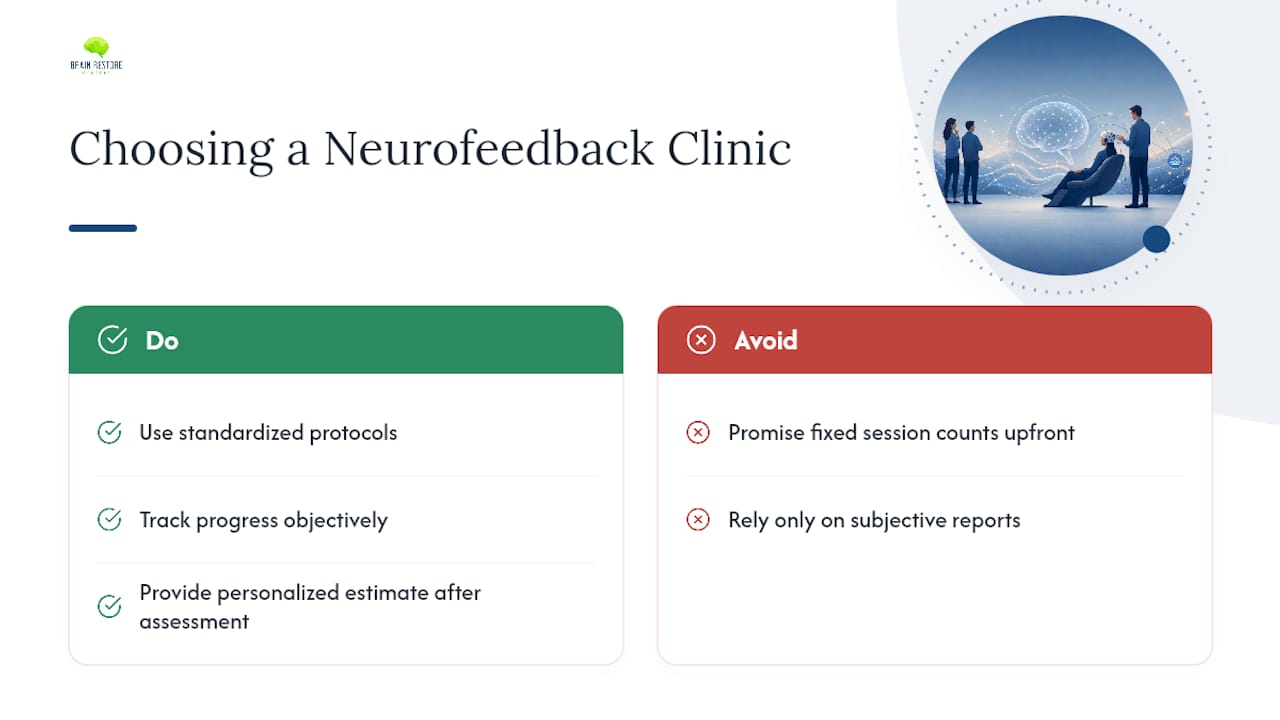
The practical takeaway: look for a clinic that uses standardized protocols, tracks progress objectively, and provides a personalized session range estimate after initial assessment rather than promising a fixed number upfront.
A good plan starts before your first training session, not after.
Pro Tip: Bring a written symptom log to your intake appointment. Clinicians who use qEEG-informed protocols can often shorten your treatment timeline when they have specific data to work from instead of a general complaint.
For a deeper look at vetting criteria, see this patient checklist for evaluating clinic quality, and if anxiety is part of your picture, this breakdown of neurofeedback for anxiety covers condition-specific expectations. Families weighing neurofeedback alongside other approaches for children may also find this parent’s guide to counseling interventions useful for comparing options.
Patients often ask for a single number, but the honest answer is a range shaped by your condition, your consistency, and how your provider tracks progress. Neurofeedback tends to work best woven into a broader care plan rather than treated as a standalone fix. Expect steady, incremental change, not overnight transformation, and reassess with your provider at regular intervals rather than waiting until the end of a full course to ask whether it’s working.
— Chad
Brainrestoremeridian is the option built for people who want personalized dosing instead of a one-size-fits-all package. Rather than guessing at a session count, the clinic’s multidisciplinary team starts with a clinical intake and qEEG-informed brain mapping to identify your specific patterns before recommending a protocol.
Your first visit typically includes a review of symptoms, a discussion of goals, and, where appropriate, brain mapping to guide protocol selection from day one. Because the clinic combines neurofeedback with functional medicine, chiropractic care, and rehabilitative therapies under one roof, factors that might get missed by a single-modality provider, sleep issues, old injuries, medication interactions get caught earlier. If you’re dealing with anxiety alongside attention or mood concerns, the neurofeedback for anxiety relief page walks through what treatment looks like for that specific case. Ready to find out what your own session plan might look like? Contact the clinic to schedule a consultation and get a qEEG-informed estimate tailored to your situation.
This article is general information, not a substitute for advice from a qualified doctor. Consult a qualified healthcare professional about your own circumstances before acting on anything here.
Most people notice initial changes between 8 and 20 sessions, while clinics commonly recommend a full course of multiple sessions for lasting results.
Neurofeedback uses operant conditioning to train brainwave patterns over repeated sessions, and some studies show measurable EEG changes, though group-level clinical outcomes remain mixed depending on the condition and protocol.
Avoid heavy caffeine, alcohol, or sleep deprivation before a session, since these can affect brainwave readings and make it harder for the clinician to get an accurate training signal.
Some people maintain gains after completing a full course, while others benefit from periodic booster sessions to reinforce progress, particularly for more complex or long-standing conditions.
That depends on your specific symptoms and history. A clinical intake, ideally including qEEG brain mapping, helps determine whether neurofeedback alone or a combined approach fits your situation better.