How Laser Therapy Reduces Neurological Stress
June 24, 2026

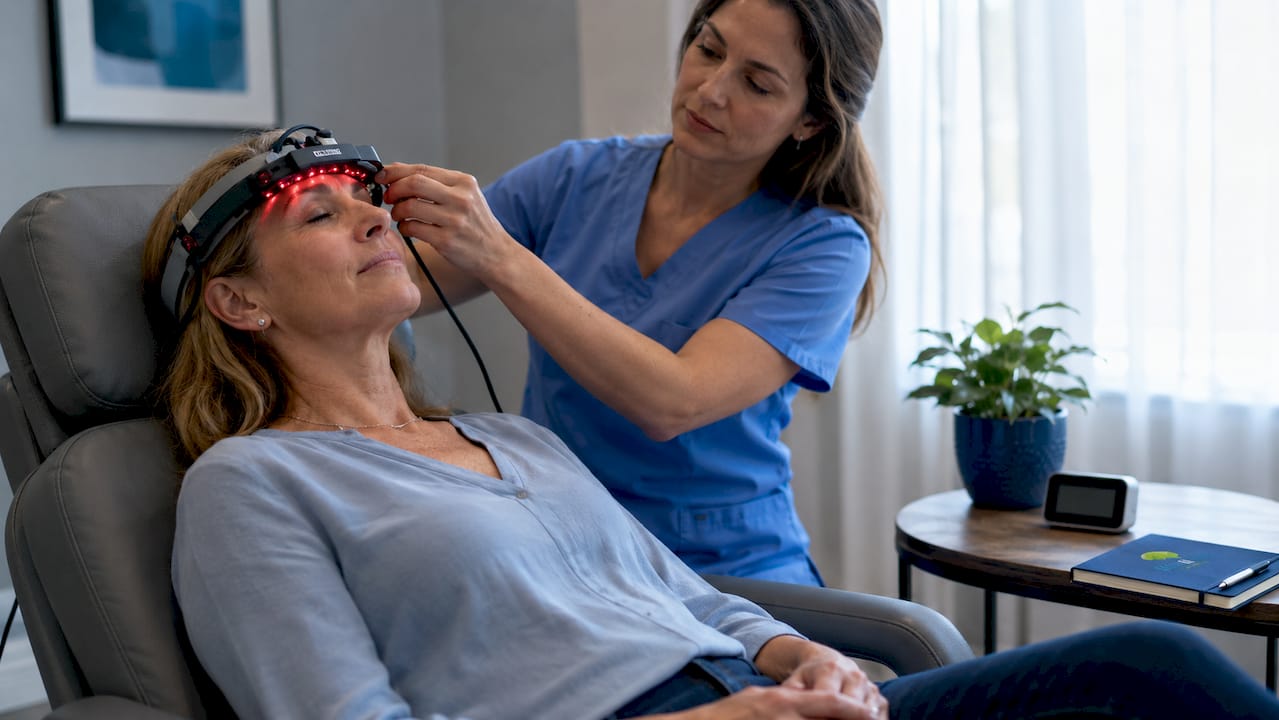
Laser therapy, specifically transcranial photobiomodulation (tPBM), reduces neurological stress by improving mitochondrial energy production and lowering brain inflammation at the cellular level. This is not a general wellness treatment. It targets a specific enzyme, cytochrome c oxidase (CCO), inside brain cell mitochondria to restore ATP production and calm inflammatory pathways. If you are dealing with cognitive fog, anxiety, or stress-related neurological symptoms, understanding how laser therapy reduces neurological stress gives you a real foundation for making informed decisions about your care.
Neurological stress is defined as a state of brain dysfunction caused by chronic inflammation, oxidative damage, and disrupted neural activity. It is not simply feeling mentally tired. The underlying biology involves measurable changes in brain chemistry and cell behavior that affect how you think, feel, and function.
The brain’s immune cells, called microglia, are central to this process. When the brain faces injury, toxins, or chronic psychological stress, microglia activate and release pro-inflammatory signaling molecules called cytokines. These cytokines, including TNFα and IL-1β, damage neurons and disrupt the brain’s electrical communication networks. The result is a brain that cannot regulate itself efficiently.
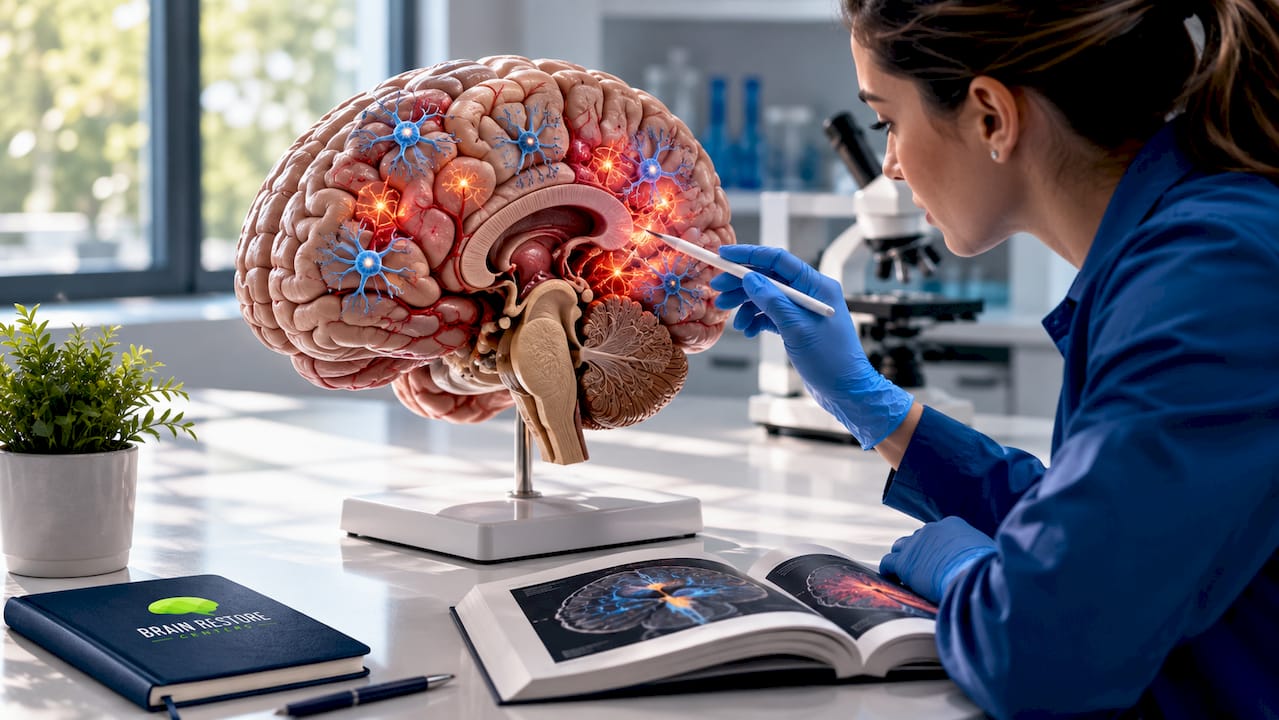
Oxidative stress compounds the problem. Mitochondria in brain cells produce reactive oxygen species (ROS) as a byproduct of energy metabolism. Under chronic stress, ROS production exceeds the brain’s ability to neutralize it. This damages cell membranes, proteins, and DNA inside neurons. Mitochondrial dysfunction follows, reducing ATP output and leaving brain cells energy-starved.
The symptoms you experience from neurological stress include:
These symptoms often overlap with conditions like post-concussion syndrome, chronic fatigue, and anxiety disorders. Recognizing neurological stress as a biological process, not just a mental state, is the first step toward addressing it with targeted therapies.
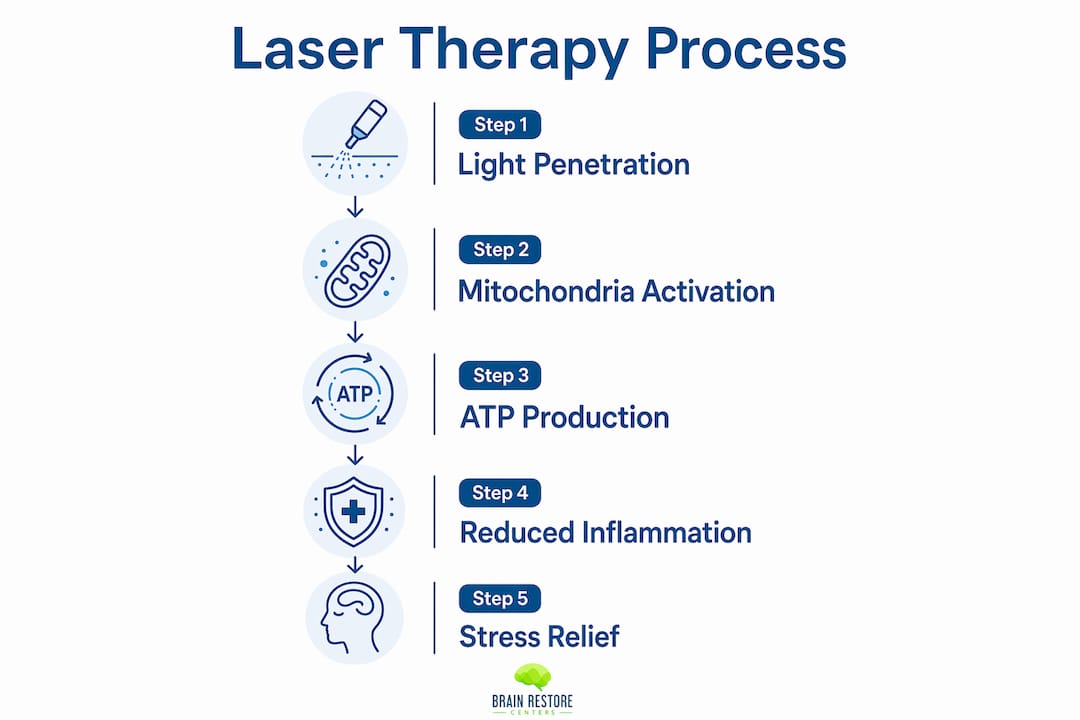
Photobiomodulation (PBM) uses red and near-infrared light wavelengths, typically in the 600–1100 nm optical window, to penetrate the skull and reach cortical brain tissue. The primary biological target is cytochrome c oxidase, the terminal enzyme in the mitochondrial electron transport chain. When CCO absorbs this light, it triggers a cascade of restorative cellular events.
Here is the step-by-step process:
Treatment parameters matter significantly. Penetration of red and near-infrared light through the skull ranges from 0.2% to 10% depending on wavelength and device. Clinical devices are calibrated to optimize wavelength and irradiance so enough light reaches cortical targets to produce a biological effect. More light is not always better. PBM follows a biphasic dose response, meaning too little or too much irradiance reduces effectiveness.
Pro Tip: If you are evaluating a laser therapy provider, ask specifically about the wavelength and irradiance settings they use. A provider who cannot answer that question is not applying the therapy correctly.
The research base for PBM in neurological applications has grown substantially. Animal model studies and emerging clinical work now document specific biomarker changes that explain how laser therapy produces its effects.
| Study Focus | Key Finding | Source |
|---|---|---|
| Mitochondrial function and oxidative stress | Red and infrared wavelengths improved behavioral and biological markers in chronic stress animal models | Transcranial PBM, 2026 |
| Microglial toxicity and neuronal survival | 808 nm light reduced microglial toxicity and enhanced neuronal survival in co-culture experiments | Near-infrared light study, SUNY |
| Brain hyperactivity and connectivity | 1064 nm transcranial laser reduced elevated brain activity and preserved connectivity in a rat pain model | Transcranial PBM analgesia study |
| Frequency-specific cognitive effects | 40 Hz PBM reduced IL-1β in prefrontal cortex and increased synaptogenesis proteins in rat brain | Frequency-specific PBM, 2026 |
| Clinical safety consensus | A 2026 multidisciplinary expert consensus confirmed PBM is safe for adults without DNA damage risk when dosed correctly | Evidence-based clinical consensus |
The frequency-specific findings are particularly significant. Both 5 Hz (theta) and 40 Hz (gamma) PBM improved cognition in animal models, but 40 Hz showed a stronger effect on prefrontal cortex inflammation. This tells us that the frequency at which light is pulsed, not just the wavelength, shapes the neurological outcome. That level of specificity is what separates well-designed laser therapy from generic light exposure.
One important limitation: most high-quality studies remain preclinical. Human trials are growing in number, but standardized protocols across clinics are still being established. The 2026 clinical consensus endorses safety but highlights that efficacy depends on correct dosing and the specific condition being treated. Patients should seek providers who follow evidence-based protocols rather than one-size-fits-all approaches.
Laser therapy occupies a distinct position among neurological stress treatments because it works at the mitochondrial level rather than through chemical or behavioral pathways.
Compared to pharmacological treatments:
Compared to behavioral therapies:
Compared to neurofeedback:
The main limitation of laser therapy is parameter sensitivity. Different wavelengths, frequencies, and irradiance levels produce different outcomes. Without standardized protocols, results vary. This is why the biological effects of laser therapy depend heavily on the clinical expertise behind the treatment plan, not just the device itself.
Laser therapy reduces neurological stress by targeting mitochondrial cytochrome c oxidase, restoring ATP production, lowering oxidative stress, and rebalancing microglial inflammation in brain tissue.
| Point | Details |
|---|---|
| Primary mechanism | PBM activates cytochrome c oxidase to boost ATP and reduce reactive oxygen species in neurons. |
| Inflammation pathway | Near-infrared light shifts microglia from pro-inflammatory to anti-inflammatory states, lowering TNFα and IL-1β. |
| Parameter specificity | Wavelength, frequency, and irradiance all determine outcomes; more light does not mean better results. |
| Complementary value | PBM works best alongside neurofeedback and behavioral therapies, not as a standalone treatment. |
| Safety profile | A 2026 expert consensus confirms PBM is safe for adults when applied with correct dosing protocols. |
Most people who come to us with neurological stress expect to feel something during a laser therapy session. They expect a calming sensation, a shift in mood, or some immediate sign that the treatment is working. That expectation is understandable, but it is also the most common source of early discouragement.
PBM does not work like a relaxation technique. It works like cellular maintenance. The changes happening at the mitochondrial level are not felt in real time. What patients notice, usually after several sessions, is that their thinking is clearer, their sleep is more stable, or their anxiety feels less reactive. Those shifts are downstream of the mitochondrial and anti-inflammatory changes the light is producing.
The research on frequency-specific PBM is what I find most compelling right now. The fact that 40 Hz pulsed light reduces IL-1β specifically in the prefrontal cortex, while also increasing synaptogenesis proteins, suggests we are moving toward genuinely targeted neurological protocols. That is a different category of treatment than broad-spectrum wellness light devices you can buy online.
What I caution against is the assumption that any laser device will produce these results. The penetration fraction through the skull is low, the biphasic dose response is real, and the frequency specificity matters. Patients deserve providers who understand those parameters and apply them deliberately. The science is solid. The execution is what separates effective care from wasted time.
— Chad
Brainrestoremeridian integrates photobiomodulation with neurofeedback, functional medicine, and chiropractic care to address neurological stress at every level, from mitochondrial function to brain electrical activity.
If you are dealing with cognitive fog, anxiety, or post-concussion symptoms, a single-modality approach rarely resolves the full picture. Brainrestoremeridian’s brain health restoration program combines laser therapy with neurofeedback and functional medicine to create a personalized care plan grounded in your specific neurological profile. The clinic serves patients in Meridian, Idaho, and the surrounding area. Reach out to learn whether this integrated approach fits your situation.
Laser therapy delivers red to near-infrared light that is absorbed by cytochrome c oxidase in brain cell mitochondria, increasing ATP production and reducing oxidative stress. This process also shifts microglia from inflammatory to anti-inflammatory states, lowering cytokines that damage neurons.
A 2026 multidisciplinary expert consensus confirmed that photobiomodulation is safe for adults without DNA damage risk when applied at correct dosing parameters. Safety depends on using the right wavelength, irradiance, and treatment frequency for the condition being treated.
Results vary by individual and condition severity, but most neurological improvements from PBM are gradual and build across multiple sessions rather than appearing after a single treatment. Clinical goals target biomarkers like mitochondrial Complex IV activity and inflammatory cytokines, which change over time.
Laser therapy addresses mitochondrial dysfunction and neuroinflammation, which medications typically do not target directly. It is best used as part of a broader care plan that may include behavioral therapy, neurofeedback, and functional medicine rather than as a direct medication replacement.
Research supports wavelengths in the 600–1100 nm optical window, with 808 nm and 1064 nm showing documented effects on microglial activity and brain connectivity. Frequency-specific pulsing at 40 Hz has shown particular benefit for prefrontal cortex inflammation and synaptogenesis in recent studies.
Questions about your next step?
Our Meridian team can help you understand the evaluation process and which care options may fit your needs.
Schedule a ConsultationPrefer to speak with our team? Call 208-639-1397