Great Life Chiropractic for Brain and Nervous System Health
June 18, 2026


Great life chiropractic is a nervous system-centered approach to care that targets the root causes of cognitive and neurological decline, not just surface-level pain. Unlike standard chiropractic visits focused on temporary relief, this model treats spinal alignment as a direct pathway to brain health. When your spine is misaligned, nerve signals between your brain and body get disrupted. That disruption can show up as brain fog, memory lapses, poor coordination, and chronic fatigue. Understanding this connection is the first step toward reclaiming your neurological function.
Neurological chiropractic care focuses on restoring optimal communication between the brain and body by removing nerve interference. That means pain reduction is an outcome, but it is not the primary goal. The primary goal is nervous system optimization, which supports your body’s ability to regulate and repair itself.
Spinal misalignments, called subluxations, compress or irritate nerve roots. Those irritated nerves send incomplete or distorted signals to the brain. Over time, that distortion contributes to cognitive symptoms that most people never connect to their spine.
Here is what chiropractic adjustments target when the goal is neurological improvement:
Chiropractic adjustments aim to instill a chiropractic lifestyle for long-term health, not just temporary symptom relief. Providers at practices like Better Life Chiropractic and Wellness emphasize educating patients on nervous system benefits as part of every care plan.
Pro Tip: If you are experiencing brain fog or memory issues, ask your chiropractor specifically about cervical spine alignment and its relationship to cerebral blood flow. This is a more targeted conversation than simply describing your symptoms.
Great Life Chiropractic in Deerfield Beach uses techniques including Chiropractic Biophysics, the Activator Instrument method, the Webster technique, and craniosacral therapy. Each of these targets a specific aspect of spinal and neurological function. Chiropractic Biophysics, for example, uses precise postural correction to restore the spine’s natural curves, which directly reduces nerve stress.
Here is how the most common techniques differ in application:
Beyond spinal adjustments, many nervous system-focused practices integrate complementary therapies. Advanced chiropractic clinics serve patients from newborns to seniors and offer tailored care plans that include massage therapy and dry needling under one roof. Laser therapy is also increasingly common as an adjunct for reducing neuroinflammation and accelerating tissue repair.
The table below compares these core techniques by target area and best-fit patient profile:
| Technique | Primary target | Best-fit patient |
|---|---|---|
| Chiropractic Biophysics | Structural spinal curves | Postural distortion, chronic nerve compression |
| Activator Instrument | Specific vertebral segments | Sensitive patients, pediatric, elderly |
| Webster technique | Sacrum and pelvis | Lower lumbar nerve issues, prenatal care |
| Craniosacral therapy | Cerebrospinal fluid rhythm | Concussion recovery, chronic headaches |

Personalized diagnostics drive which technique gets used. Initial consultations commonly include digital X-rays and the Insight diagnostic system to identify root causes rather than just symptoms. Appointments often last 30–60 minutes and produce a data-driven treatment plan specific to your neurological profile.
Traditional chiropractic care typically addresses musculoskeletal complaints. A patient comes in with back pain, receives an adjustment, and leaves with reduced discomfort. That model works for acute pain but falls short for patients dealing with cognitive symptoms, neurological decline, or chronic systemic dysfunction.
A nervous system-focused model, like the one practiced at better life family chiropractic clinics and similar neurologically oriented practices, operates differently. The differences are meaningful:
Many people mistakenly view chiropractic only as pain relief. The nervous system focus reframes chiropractic as a lifestyle practice that maintains overall well-being across decades, not just during flare-ups. This distinction matters most for patients dealing with cognitive challenges, where consistent nervous system support produces compounding benefits over time.
For patients managing neurological conditions alongside chiropractic care, holistic approaches to neurological disease that combine multiple disciplines consistently produce better outcomes than single-modality treatment.
Your first visit to a nervous system-focused chiropractic practice is a diagnostic session as much as a treatment session. The chiropractor collects a detailed health history, performs orthopedic and neurological assessments, and typically orders digital X-rays. The Insight diagnostic system measures nerve function through surface electromyography and thermal scanning, giving the provider a real-time picture of where nerve interference is occurring.
That first appointment typically runs 30–60 minutes. You leave with a clear picture of your spinal health and a proposed care plan, not just a single adjustment and a follow-up card.
Ongoing care follows a structured schedule. Most neurological chiropractic plans involve three phases. The first phase addresses acute nerve interference and runs several weeks. The second phase focuses on correction and retraining the nervous system’s response patterns. The third phase is maintenance, which preserves the gains made and prevents regression.
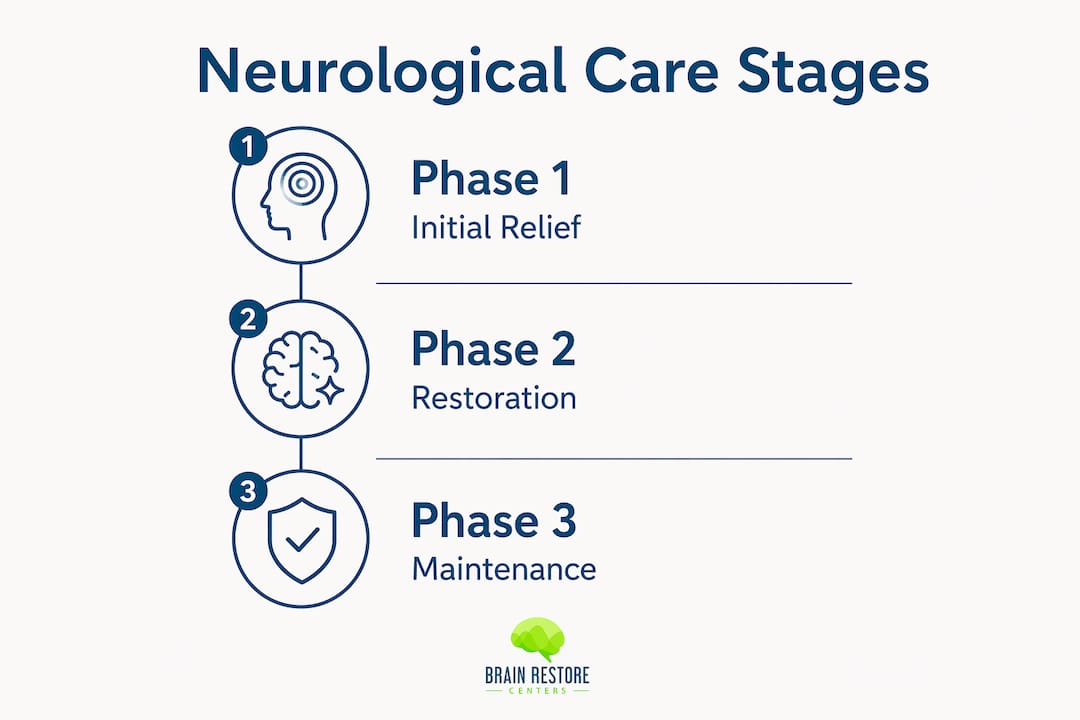
Neurological healing requires a series of consistent adjustments. Immediate relief is only the first step toward long-term regeneration and nervous system retraining. Patients who commit to the full plan see the most durable cognitive and physical improvements.
Pro Tip: Track your cognitive symptoms, not just your pain levels, between appointments. Note changes in sleep quality, mental clarity, and energy. This data helps your chiropractor calibrate your care plan far more accurately than pain scores alone.
Progress tracking is built into the care model. Providers re-evaluate nerve function using the same diagnostic tools at regular intervals, so you can see objective changes in your nervous system health, not just feel them. Chiropractic care and overall wellness programs that include this kind of tracking produce better patient adherence and measurably stronger outcomes.
Nervous system-focused chiropractic care produces lasting cognitive and neurological improvements only when it combines precise diagnostics, consistent adjustments, and patient education into a structured long-term plan.
| Point | Details |
|---|---|
| Nervous system is the primary target | Chiropractic adjustments restore brain-body communication, not just pain relief. |
| Diagnostics drive the plan | Digital X-rays and the Insight system identify nerve interference before treatment begins. |
| Technique selection matters | CBP, Activator, Webster, and craniosacral therapy each address different neurological needs. |
| Consistency produces results | Neurological retraining requires a phased schedule of adjustments over weeks to months. |
| Education sustains gains | Patient understanding of lifestyle factors is critical for long-term nervous system health. |
Most patients I see arrive focused on a single symptom. Their back hurts, or their neck is stiff. They want that specific problem fixed. What surprises them is when we start talking about brain fog, sleep disruption, or anxiety as part of the same picture. The spine is not just a structural column. It is the primary highway for every signal your brain sends and receives.
What I have observed over years of working with neurologically focused care is that the patients who recover the most fully are the ones who stop thinking about chiropractic as a repair service. They start treating it the way they treat exercise or nutrition: something you do consistently because it keeps your system running well, not something you do only when it breaks down.
The uncomfortable truth is that most people wait too long. By the time cognitive symptoms are noticeable, nerve interference has often been building for years. Early, consistent care changes that trajectory. I have seen patients with significant memory concerns and coordination issues make real, measurable progress once their cervical and upper thoracic alignment was addressed and maintained.
The other thing I want to say plainly: chiropractic alone is rarely enough for complex neurological cases. The practices that get the best results combine spinal care with functional medicine, nutrition, and targeted therapies like neurofeedback or laser. That integrated model is not a luxury. For patients dealing with cognitive decline or neurological dysfunction, it is the standard of care worth seeking out.
— Chad
If cognitive challenges, memory concerns, or neurological symptoms are driving your search for better care, Brainrestoremeridian in Meridian, Idaho offers exactly the kind of integrated approach described in this article. The clinic combines chiropractic care with neurofeedback, functional medicine, laser therapy, and spinal decompression, all under one roof and guided by advanced diagnostics.
Every care plan at Brainrestoremeridian starts with a thorough neurological evaluation, not a generic intake form. If you are ready to address the root causes of your cognitive symptoms, start with their resource on chiropractic and brain function to understand what targeted care can do for your nervous system. For patients dealing with nerve-related pain or neuropathy, their page on ending neuropathy without drugs outlines a non-pharmaceutical path forward.
Great life chiropractic is a nervous system-focused chiropractic model that targets spinal misalignments to restore brain-body communication and support long-term neurological health, not just pain relief.
Spinal misalignments compress nerve roots and disrupt signals between the brain and body. Correcting those misalignments restores nerve flow, which directly supports mental clarity, sleep quality, and cognitive function.
Neurological healing requires consistent, organized adjustments over weeks to months. Immediate relief is the first step, but full nervous system retraining unfolds gradually across a structured care plan.
Advanced practices use digital X-rays and the Insight diagnostic system, which measures nerve function through surface electromyography and thermal scanning, to build a precise, personalized treatment plan.
For complex neurological concerns, chiropractic care works best when combined with functional medicine, nutritional strategies, and targeted therapies like neurofeedback or laser therapy as part of a multidisciplinary plan.