Cold Laser Therapy Benefits for Patients: RCTs, Dosing, When It Works
October 2, 2026

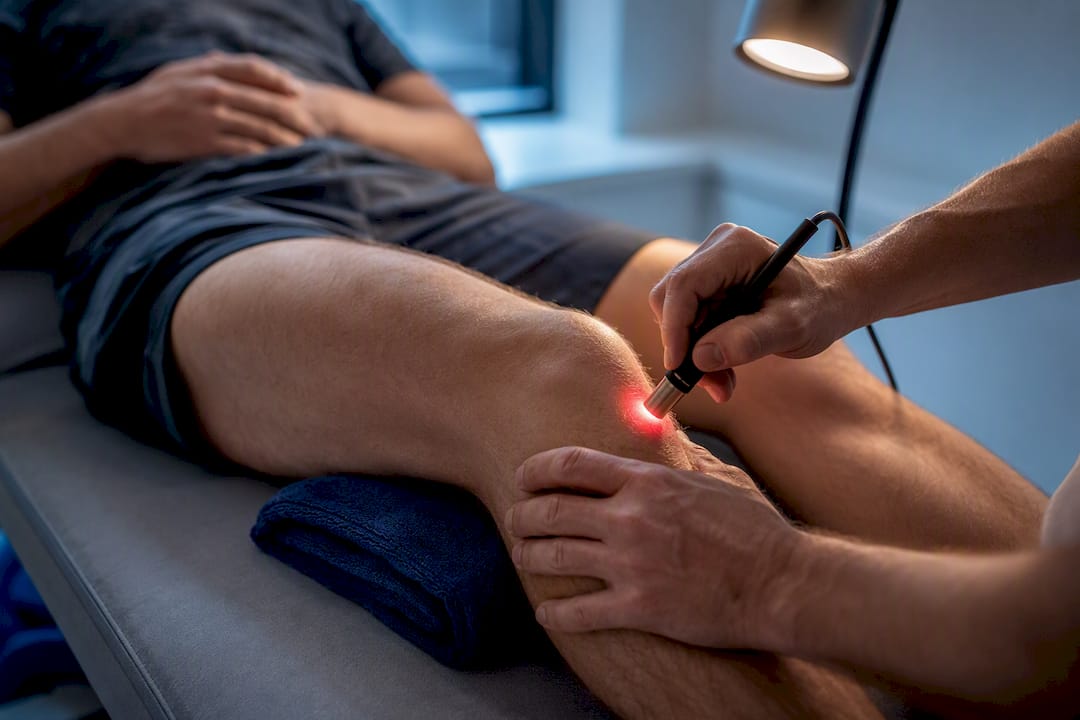
Cold laser therapy, also called low level laser therapy or photobiomodulation, offers real but condition-specific benefits: pain relief, reduced inflammation, and support for tissue repair. Evidence ranges from moderate to promising depending on what you are treating, and the safety profile across clinical trials is consistently favorable. Below, you will find which conditions have the strongest research behind them and how dosing affects results.
TL;DR:
- The effectiveness of cold laser therapy varies by condition, with strong evidence supporting benefits for knee osteoarthritis, wound healing, and certain chronic pain conditions.
- Treatment protocols differ widely in energy dose, wavelength, and frequency, which significantly influence individual outcomes.
- Most patients require multiple sessions over several weeks, with benefits gradually increasing rather than appearing after a single treatment.
- Safety is consistently reported as high, with only mild, temporary reactions like warmth or tenderness being common.
- Cold laser therapy is best used alongside active rehabilitation, such as exercise or manual therapy, rather than as a standalone solution.
Cold laser therapy, or low level laser therapy (LLLT), uses light at specific wavelengths to trigger biological responses in tissue without generating heat, which sets it apart from surgical or thermal lasers. The broader term for this process is photobiomodulation (PBM), and it covers devices ranging from small handheld LLLT units to higher powered Class IV lasers.
The mechanism starts inside the cell. Light absorbed by an enzyme called cytochrome c oxidase in the mitochondria appears to boost ATP production, the energy currency cells use for repair. This process also releases nitric oxide and generates a brief, controlled burst of reactive oxygen species, signals that can calm inflammatory pathways and support tissue regeneration.
Wavelength determines how deep the light travels. Red and near-infrared light, generally in the 600 to 1,100 nanometer range, penetrates far enough to reach muscle, joint, and nerve tissue, which is why parameters like wavelength, dose, and treatment depth matter as much as the therapy itself.
Not every condition responds the same way to photobiomodulation, and the research reflects that. Some applications have consistent trial support, while others show promise with more variable results.
An umbrella review covering 15 meta-analyses, 204 randomized trials, and more than 9,000 participants found PBM improved outcomes like knee osteoarthritis disability, fibromyalgia fatigue, and cognitive function with moderate certainty, though no outcome reached high certainty evidence. That distinction matters for how you weigh the results: PBM shows up consistently as helpful, but the research base still has real limits in strength.
Photobiomodulation has a favorable safety record. Across multiple systematic reviews, serious adverse events were rarely reported, and the most common reactions were mild and temporary, like a warm sensation or brief tenderness at the treatment site.
How many sessions you need depends on what you are treating. Acute strains or minor injuries often respond within 2 to 6 sessions, while chronic conditions such as osteoarthritis or neuropathy typically require 8 to 15 or more sessions spread across several weeks. Benefits tend to build gradually rather than appear after a single visit, so tracking your pain levels and function over time gives a clearer picture than judging any one session.
Always mention pregnancy, active cancer, or light-sensitizing medications to your provider before starting, since these are common reasons a clinician may adjust or avoid treatment.
Two people can receive “the same” laser therapy and get different results, and the reason usually comes down to parameters rather than the technology itself. Trials vary widely: reported energy doses range from under 4 joules per square centimeter to more than 100 J/cm², and treatment frequency ranges from two to three times weekly over periods lasting days to 12 weeks.
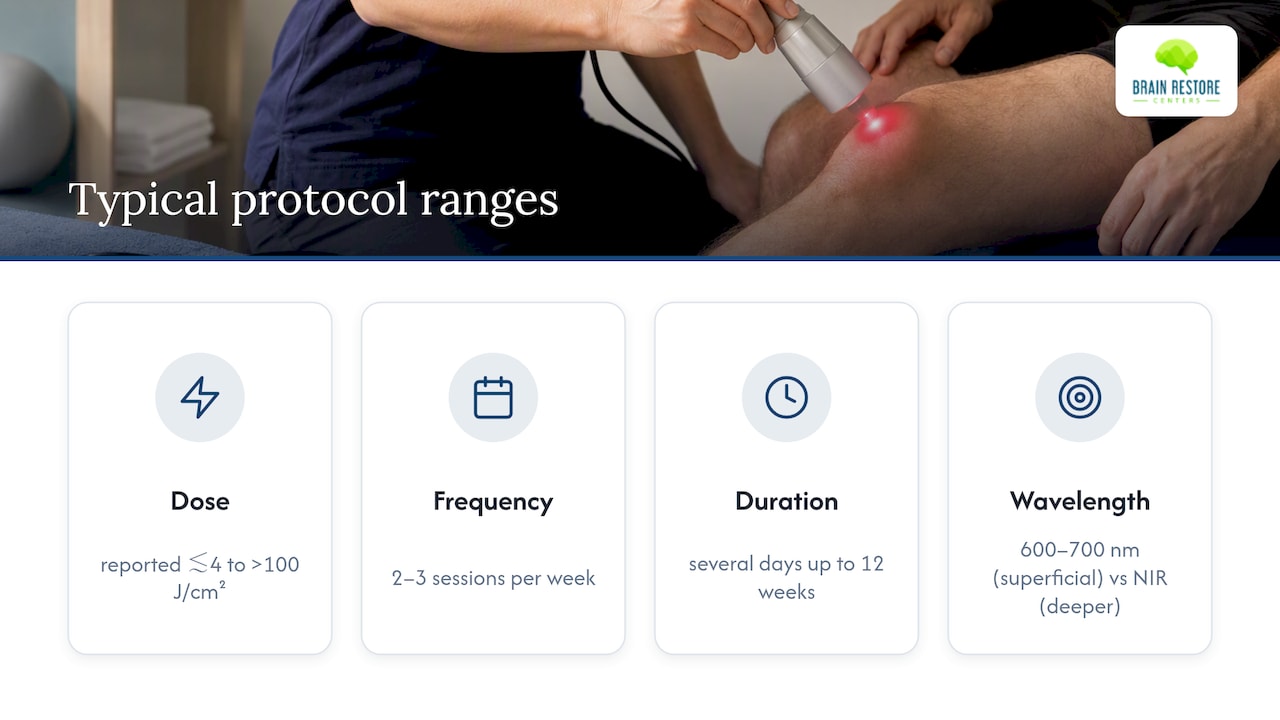
Wavelength matters too. Red light around 600 to 700 nanometers tends to stay closer to the skin surface, while near-infrared wavelengths reach deeper structures like joints and nerves. Device class matters as well: some comparative research suggests high-intensity laser therapy (HILT or Class IV) may produce modestly greater pain reduction than standard LLLT when combined with exercise, although the certainty behind these comparisons is often low and effect sizes can fall below what patients would notice clinically. Our own breakdown of why parameters, not labels, predict results covers this in more detail.
The practical takeaway: ask your provider what wavelength, dose, and frequency they use, and whether those numbers align with published research ranges rather than a one-size-fits-all setting.
Photobiomodulation works best as one piece of a larger plan, not a standalone fix. In knee osteoarthritis research, LLLT combined with exercise produced better function and lower analgesic use than exercise alone, suggesting the laser helps patients engage more fully with active rehabilitation rather than replacing it.
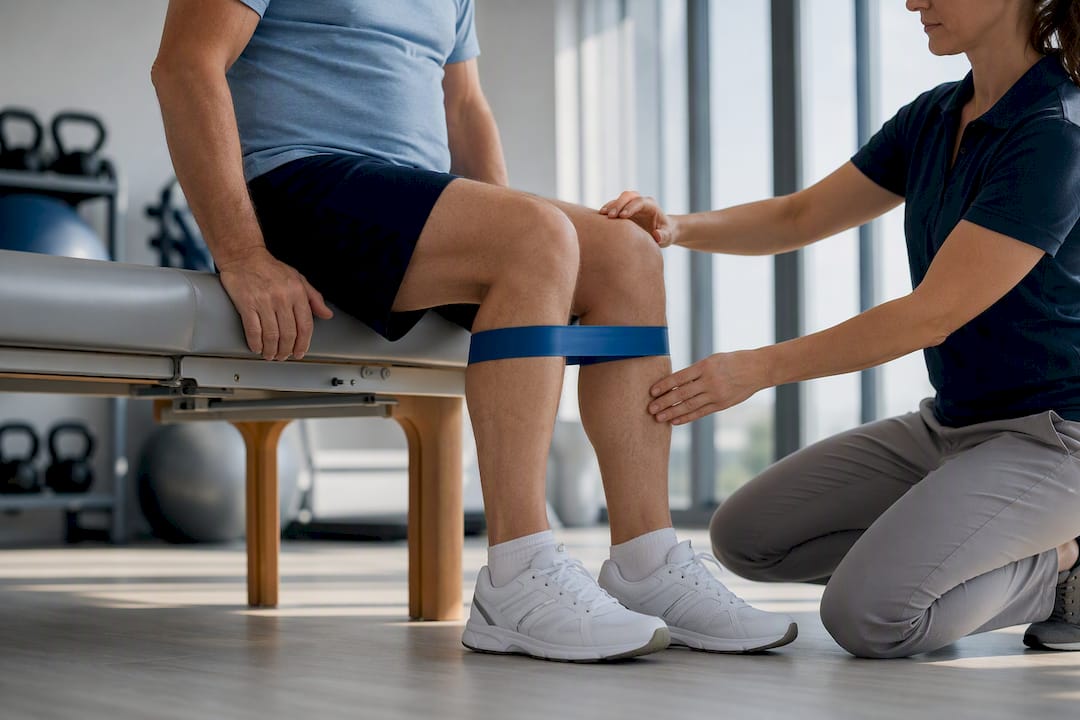
A common and sensible sequence is to use laser therapy early in a treatment plan to bring down pain and inflammation, which then makes strengthening exercises, stretching, or manual therapy more tolerable. For chronic pain patients, this combination approach also opens the door to reducing dependence on medication over time, since pain relief from the laser can lower the barrier to movement-based recovery.
Low level laser therapy is often integrated into a multidisciplinary model that can include chiropractic care, functional medicine, and neurofeedback. For diabetic neuropathy, our RCT-backed protocol uses 10 to 12 sessions, consistent with the session ranges seen in published trials for chronic nerve pain. We have also applied LLLT for knee pain relief, pairing it with rehab exercises to support longer-term function rather than short-term symptom masking.
These outcomes reflect our own clinical experience and documented protocols, not a universal guarantee. If you are considering laser therapy for a specific condition, a personalized evaluation with a qualified clinician remains the best way to know what to expect.
The evidence for photobiomodulation is real but uneven, and understanding the difference matters more than chasing a simple yes or no answer. Meta-analyses and systematic reviews consistently find measurable benefits for pain and function, particularly in knee osteoarthritis, wound healing, and select chronic pain conditions. The umbrella review of PBM trials found moderate certainty evidence for several outcomes, including knee osteoarthritis disability and fibromyalgia fatigue, but it also found no outcome reached high certainty.
Heterogeneity is the recurring theme across this research. Trials differ in wavelength, dose, treatment frequency, and how they measure success, which makes it harder to pool results into one clean conclusion. When trials report inconsistent parameters, outcomes tend to be inconsistent too, and reviewers regularly call for more standardized protocols, closer to WALT (World Association for Laser Therapy) dosing guidance, so future studies can be compared more directly.
None of this means the therapy does not work. It means the honest answer is conditional: PBM tends to help with pain and function in several well-studied conditions, the certainty behind that help varies by outcome, and no current review claims the evidence is definitive across the board. A therapy backed by moderate certainty evidence for pain relief is still a reasonable option worth discussing with a clinician, especially when the safety profile is this favorable.
Cold laser therapy is not positioned as a replacement for standard treatments like anti-inflammatory medication or physical therapy. It is better understood as a complement. Research on knee osteoarthritis shows that LLLT paired with exercise produced better outcomes than exercise alone, including reduced use of pain medication, which points to laser therapy working alongside rehab rather than against it.
NSAIDs and other pain medications act quickly but carry known risks with long-term use, including gastrointestinal and cardiovascular concerns, and they do not address the underlying tissue changes driving chronic pain. Physical therapy builds strength and mobility over time but can be limited by how much pain a patient can tolerate during early sessions. Photobiomodulation’s role often sits in that gap: reducing pain and inflammation enough that a patient can participate more fully in the exercise-based work that produces lasting change.
For conditions like knee osteoarthritis, a non-surgical, multimodal approach that includes adjunctive therapies alongside standard care tends to outperform any single treatment used in isolation.
Cold laser therapy is not a one-and-done fix for chronic conditions. Most trial protocols involve a defined course of sessions rather than a single treatment, and benefits tend to build over that course rather than appear immediately. For conditions like osteoarthritis or chronic neuropathy, this often means periodic maintenance sessions after the initial course to sustain pain relief and function.
Research on photobiomodulation suggests it works best on tissue under ongoing metabolic or inflammatory stress, like an arthritic joint or a slow-healing wound, rather than on healthy tissue with no underlying problem. That distinction helps explain why maintenance matters for chronic conditions: the underlying stress on the tissue does not disappear after one course of treatment, so periodic follow-up sessions can help preserve gains. Discussing a maintenance schedule with your provider, based on how you responded to the initial course, is a more reliable approach than assuming benefits are permanent after treatment ends.
In practice, patients with chronic joint pain, neuropathy, or slow-healing tissue tend to see the clearest gains from photobiomodulation, especially when we track pain scales and function tests before and after each course. Documenting your starting point makes the difference between guessing and knowing.
— Chad
If you are dealing with joint pain, neuropathy, or a slow-healing injury, our Low Level Laser Therapy service applies the same evidence-based parameters discussed here, tailored to your condition and history.
A first visit typically includes a review of your symptoms, a discussion of your treatment goals, and a laser session with documented settings so your progress can be tracked over time.
| What you get | Details |
|---|---|
| Service | Low Level Laser Therapy |
| First visit | Symptom review, goal setting, initial session |
| Combination options | Brain Restore Program, chiropractic care |
This article is general information, not a substitute for advice from a qualified doctor. Consult a qualified healthcare professional about your own circumstances before acting on anything here.
Research supports meaningful benefits for specific conditions, particularly knee osteoarthritis, chronic pain, and wound healing, where multiple randomized trials and meta-analyses report improved pain and function. Evidence strength varies by condition, with moderate certainty for several outcomes rather than definitive proof across every use case.
Serious side effects are rare across clinical trials, and the treatment carries a favorable safety profile overall. The most commonly reported reactions are mild and temporary, such as a warm sensation or brief tenderness at the treatment site.
Most people notice gradual improvement over a course of sessions rather than an immediate change after one visit. Chronic conditions like osteoarthritis or neuropathy often require 8 to 15 or more sessions before benefits become consistent.
Session frequency depends on the condition being treated: acute issues may resolve in 2 to 6 sessions, while chronic conditions typically involve longer courses spread across several weeks. Your provider should set a schedule based on your response and document the parameters used at each visit.