Brain Function Testing in Meridian: What You Need to Know
July 25, 2026


If you’ve been struggling with memory slips, brain fog, or unexplained mood changes, brain function testing in Meridian gives you real answers, not guesswork. Neuropsychological and cognitive assessments measure how well your brain is actually working, pinpointing strengths and deficits that standard imaging like MRI simply cannot detect. Brainrestoremeridian and other local providers use standardized written and computerized tests alongside advanced qEEG brain mapping, all interpreted by fellowship-trained neuropsychologists. The result is a clear picture of your cognitive health and a personalized path forward.
What brain function testing in Meridian typically includes:
Brain function testing is relevant for a wider range of people than most realize. You don’t need a formal diagnosis to benefit. If something feels “off” cognitively, an objective evaluation can confirm or rule out underlying issues before they progress.
Neuropsychological testing in Meridian evaluates conditions including mild cognitive impairment, Alzheimer’s disease, frontotemporal dementia, traumatic brain injury (TBI), and various psychiatric conditions. Testing also helps clinicians track recovery after a concussion or monitor the progression of neurodegenerative diseases over time.
Common symptoms and conditions that prompt a cognitive assessment:
Many people put off testing because they don’t know what to expect. The process is structured, unhurried, and designed to be as comfortable as possible.
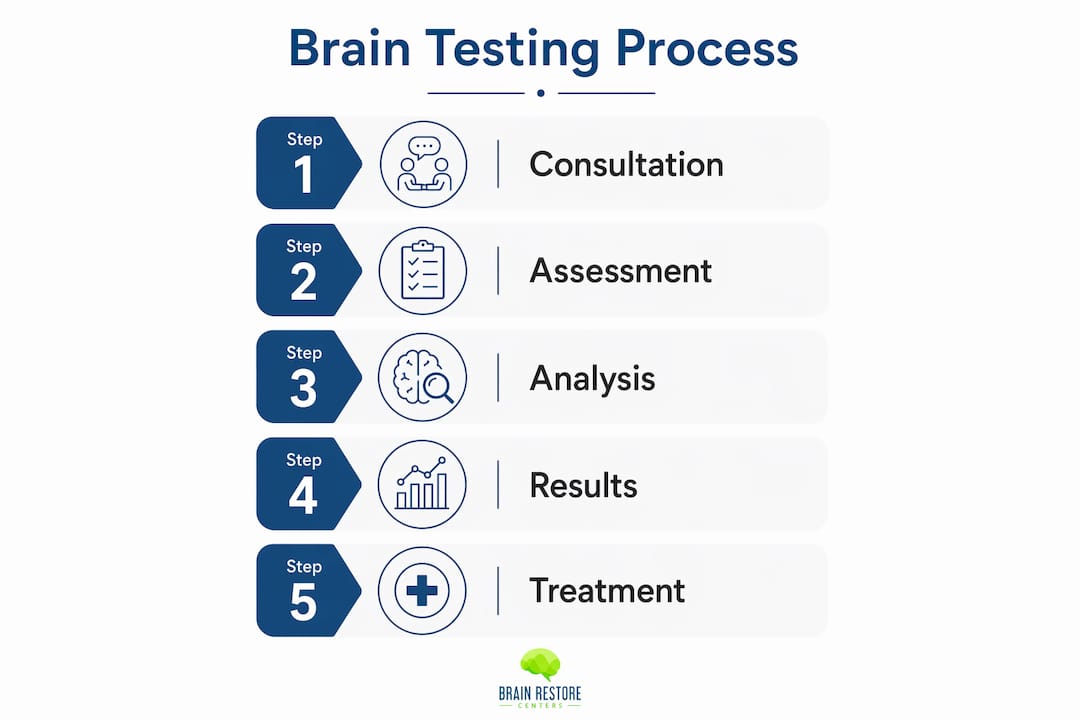
Neuropsychological testing begins with a pre-assessment consultation where the clinician reviews your medical history, current symptoms, and testing goals. From there, you’ll complete a battery of standardized written and computerized tests covering memory, attention, language, processing speed, and executive function. The process generally takes several hours, sometimes spread across more than one session, depending on the complexity of your situation.
After testing, a fellowship-trained neuropsychologist interprets the results and generates a detailed report. You then meet for a follow-up consultation to review findings, ask questions, and discuss recommended next steps. Advanced providers in Meridian also incorporate qEEG brain mapping to capture brainwave patterns that standard tests cannot measure.
Steps in the evaluation process:
The clearest benefit of a formal cognitive assessment is diagnostic certainty. Vague symptoms like forgetfulness or fatigue have many possible causes, and testing separates cognitive decline from stress, sleep issues, or mood disorders with objective data.
Beyond diagnosis, testing creates a documented baseline. If your condition changes over time, clinicians can compare future results to your original scores and measure progress or decline precisely. This matters especially for patients managing neurodegenerative conditions or recovering from a brain injury.
Testing also drives better treatment decisions. Rather than guessing which therapies might help, your care team can target interventions to the specific cognitive domains where you need the most support. For some patients, results also support legal documentation or occupational health evaluations.
Key benefits of brain function testing:
A brain function assessment is the starting point, not the finish line. Once your results are in hand, Meridian providers offer a range of evidence-informed therapies tailored to your findings.
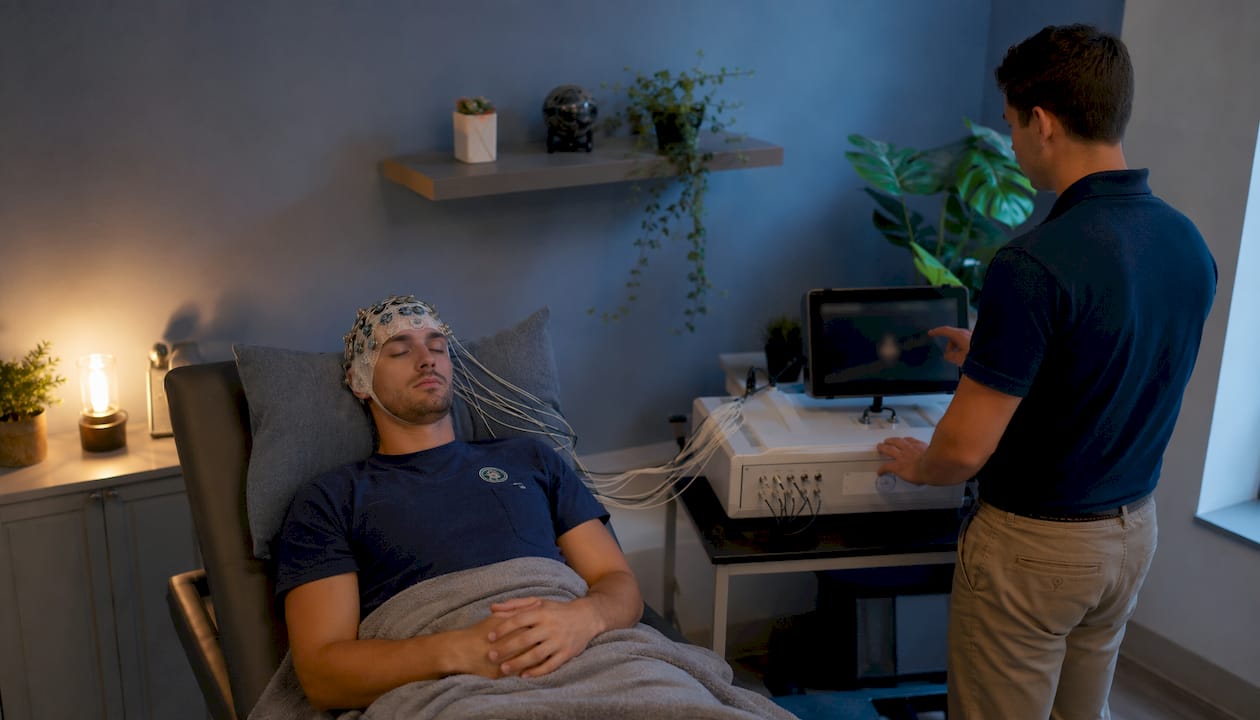
Neurofeedback is one of the most widely used post-assessment tools. Guided by qEEG data, it trains your brain to self-regulate by rewarding healthier brainwave patterns, which can improve focus, mood, and cognitive stamina over time. Think of it as exercise for your mind, with the workout plan built from your own brain map.
Photobiomodulation, commonly called red light therapy, uses specific light wavelengths to stimulate mitochondrial function in brain cells, boosting energy production and reducing mental fatigue. Functional medicine approaches address root causes like hormonal imbalances, nutritional deficiencies, and chronic inflammation. Adjunct chiropractic care and neurological rehabilitation round out the picture for patients whose brain health is also affected by spinal or musculoskeletal factors.
Common treatment modalities available after testing:
Standard neuropsychological testing tells you what is happening in your brain. Functional medicine asks why. That distinction shapes the entire treatment plan.
Functional medicine practitioners in Meridian assess environmental exposures, dietary patterns, hormonal balance, and gut health as contributing factors to cognitive decline. Addressing these root causes alongside neuro-technologies like neurofeedback and photobiomodulation produces more lasting results than either approach alone. A functional medicine approach to mental health treats the brain’s internal environment, not just its symptoms.
Pro Tip: Before your first appointment, keep a two-week log of sleep quality, diet, energy levels, and mood patterns. Functional medicine clinicians use this kind of real-world data to identify triggers that lab tests alone might miss.
How functional medicine integrates with brain assessment:
Not all cognitive assessments are created equal. The quality of your results depends heavily on who interprets them and what tools they use.

Fellowship-trained neuropsychologists bring a level of specialization that general practitioners cannot replicate. When evaluating a provider, ask whether testing is administered and interpreted by a credentialed neuropsychologist, or delegated to less specialized staff. Ask specifically which test batteries are used and whether qEEG brain mapping is part of the evaluation.
Look for clinics that offer a follow-up consultation included in the process, not as an add-on. A written report you can share with other providers is also a sign of a thorough practice. Brainrestoremeridian combines fellowship-level expertise with advanced brain mapping technology and a clear post-assessment care pathway, which is exactly what you want when the stakes involve your cognitive health.
Questions to ask any Meridian testing provider:
Expect the full process to span one to three weeks from your first appointment to your results consultation. The testing itself generally takes several hours, sometimes completed in a single extended session or split across two appointments for patients who fatigue easily.
After testing, the neuropsychologist needs time to score, analyze, and write a detailed report. This interpretation phase typically takes one to two weeks. Your follow-up meeting to review findings is usually scheduled shortly after the report is complete. If qEEG brain mapping is included, that session adds time but also adds significant depth to the overall picture.
Cost is one of the most common questions patients ask, and the honest answer is that it varies. Many specialized brain health clinics in Meridian operate outside traditional medical insurance, relying on wellness program models rather than standard billing. This means out-of-pocket costs are common, and verifying coverage before your first appointment is worth doing.
Some neuropsychological testing, particularly when ordered by a physician for a diagnosed condition, may be partially covered by Medicare or private insurance. Functional medicine components and advanced brain mapping tools are less likely to be covered. Ask the clinic directly about their fee structure, whether they provide superbills for insurance reimbursement, and whether payment plans are available. Brainrestoremeridian offers a free initial brain scan as a starting point, which lowers the barrier to getting your first look at how your brain is functioning.
When you’ve read enough about brain health and you’re ready to actually do something about it, Brainrestoremeridian gives you a concrete next step. Rather than sending you through a fragmented referral chain, the clinic brings together qEEG brain mapping, fellowship-level neuropsychological assessment, neurofeedback, photobiomodulation, functional medicine, and chiropractic care under one roof in Meridian, Idaho.
What sets Brainrestoremeridian apart is the integration. Your test results directly inform your treatment plan, and your care team adjusts that plan as your brain responds. Whether you’re dealing with post-concussion fog, early memory concerns, or a condition like TBI, the clinic’s brain health restoration approach is built around your specific findings, not a generic protocol. Start with a free brain scan to see exactly where you stand, then schedule a one-on-one consultation to map out your personalized restoration plan.
Brain function testing in Meridian, conducted by fellowship-trained neuropsychologists using qEEG brain mapping and standardized test batteries, delivers the diagnostic clarity needed to build a personalized, effective treatment plan.
| Point | Details |
|---|---|
| Fellowship-trained expertise matters | Assessments interpreted by fellowship-trained neuropsychologists produce more accurate, actionable results than general evaluations. |
| qEEG detects what MRI cannot | qEEG brain mapping captures real-time brainwave patterns that standard imaging like CT or MRI simply cannot detect. |
| Testing takes several hours to complete | The evaluation generally takes several hours, sometimes across more than one session, with results delivered in a follow-up meeting. |
| Functional medicine addresses root causes | Combining neuro-technologies with diet, hormonal, and lifestyle assessment produces more lasting brain health improvement. |
| Brainrestoremeridian integrates testing and treatment | Brainrestoremeridian offers a free brain scan, fellowship-level assessment, and a full suite of post-assessment therapies in Meridian, Idaho. |