
Balance Training After Concussion: Exercises and When to Seek Help
October 13, 2026

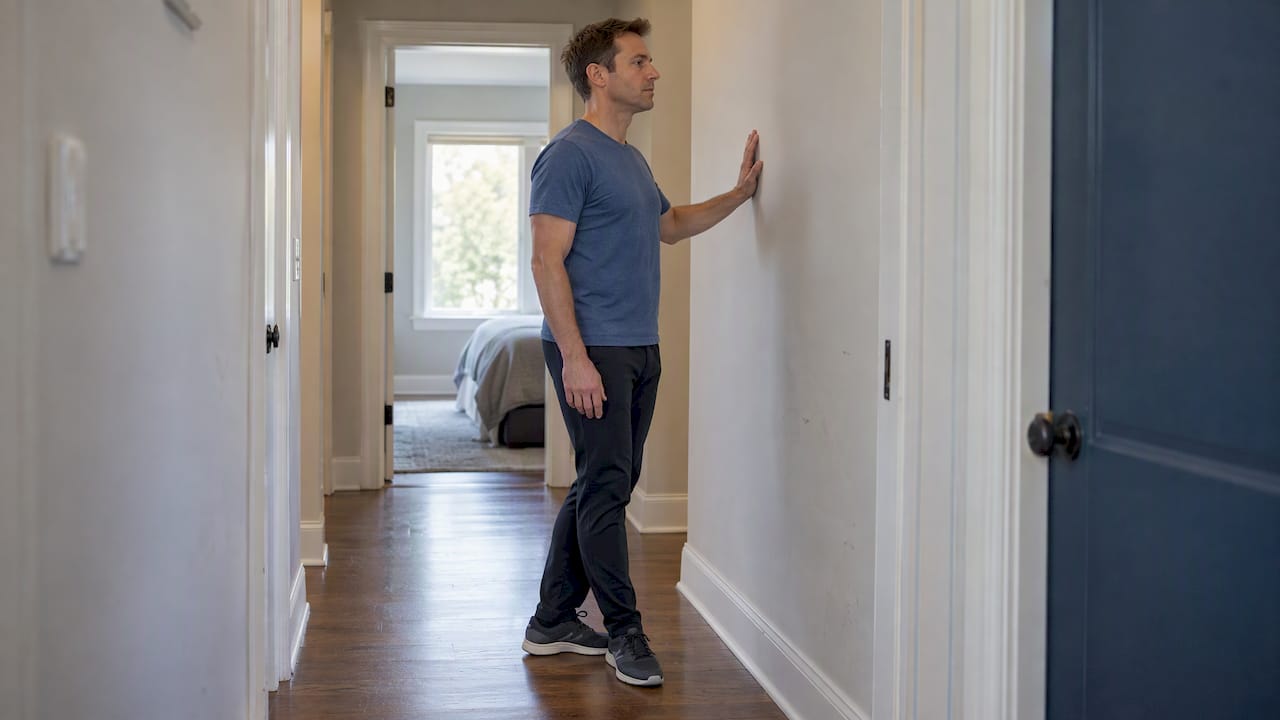
Supervised, symptom-monitored balance training is appropriate for most people recovering from concussion, and it commonly helps reduce dizziness when paced correctly. Start with gaze-stabilization drills, standing balance progressions, and gentle gait challenges, backing off whenever symptoms spike. If you are not improving within 2 to 4 weeks, that is your cue to get reassessed rather than push through on your own.
TL;DR:
- Keep sessions to a few minutes per exercise, once or twice daily, and change only one factor at a time as symptoms allow.
- Start VOR x1 seated for about one minute, then move to standing only when seated sets feel manageable; keep support within reach.
- Seek assessment for worsening symptoms, blurred vision with head movement, falls, or dizziness disrupting work, school, or driving; specialists can test vestibular and neck function.
- A 2024 review found short term improvement in perceived dizziness, while formal balance test results varied and the overall evidence remained limited.
- For return to exercise or sports, begin with 5 to 10 minutes of light activity and wait at least a day between progression stages.
A concussion can disrupt several systems your brain relies on to keep you upright and steady: the vestibular system in your inner ear, your visual and oculomotor pathways, the proprioceptive feedback from your joints and muscles, and even the muscles and joints of your neck. When these systems fall out of sync, you feel it as dizziness, unsteadiness, or that sense of the room tilting when you turn your head too fast.
Rehabilitation aims to retrain these systems together. The goals are straightforward: restore gaze stability so your vision stays clear during movement, rebuild postural control so you feel steady standing and walking, and help your nervous system relearn how to handle motion without triggering symptoms, a process clinicians call habituation.
As you work through this, you may encounter some recognizable clinical terms. The Vestibular/Ocular Motor Screening (VOMS) checks how your eyes and inner ear coordinate, the Dizziness Handicap Inventory (DHI) measures how dizziness affects daily life, and tandem gait or the Balance Error Scoring System (BESS) test how well you balance while standing or walking.
Most clinicians build concussion balance programs around three exercise categories. Here is how to approach each one safely.
Gaze stabilization (VOR x1): Hold a small target, like a letter on an index card, at eye level. Keeping your eyes fixed on it, turn your head side to side or up and down while the target stays still. Begin seated for about one minute, then progress to standing once seated sets feel manageable. A visio-vestibular home exercise program following this structure was linked to lower symptom burden and better follow-up exam results in a study of 527 pediatric patients.
Standing and static balance: Progress through stances as each one becomes comfortable: feet wide apart, then feet together, then one foot directly in front of the other (tandem stance). Once tandem stance feels stable, try closing your eyes or standing on a folded towel or foam pad to challenge your proprioceptive system further. Always keep a wall, counter, or sturdy chair within reach.
Ambulation and gait challenges: Walk in a straight line while turning your head left and right, practice tandem walking (heel to toe), or set up a simple obstacle course with household items to step over. Avoid combining walking with mental tasks, like counting backward, until basic gait feels solid, since dual-tasking tends to provoke symptoms early in recovery.
Pro Tip: Film yourself doing a new balance drill the first time. It is an easy way to check your form and confirm you are not compensating with your arms or trunk.
For video-guided routines matched to common concussion presentations, our vestibular exercise library walks through these same movement categories step by step.
Change only one variable at a time: your stance, your visual input, your head movement, or your speed. Layering several changes at once makes it hard to tell what triggered a symptom flare, and it raises your risk of overdoing it.
Clinician-prescribed programs tend to favor short, frequent sessions rather than long, infrequent ones. Expect something like a few minutes per exercise, done once or twice daily, with the dose adjusted based on how you feel rather than a fixed calendar. Progression follows your symptom response, not a schedule you set in advance.
A few monitoring rules keep this safe. Stop or scale back the moment a drill produces new or clearly worse symptoms. Keep a brief daily log of what you did and how you felt afterward, since patterns become obvious over a few days that are easy to miss in the moment. If your symptoms plateau across several sessions despite steady effort, that is a signal to pause the current progression rather than push harder.
Home exercises help many people, but certain signs call for a professional evaluation rather than more independent practice.
A specialist evaluation typically includes VOMS or visio-vestibular exam testing, gait and balance assessment, positional testing to rule out benign paroxysmal positional vertigo, a hearing screen, and a cervical spine check when neck involvement is suspected. Targeted referral, whether for tailored vestibular rehab, canalith repositioning for BPPV, or cervicovestibular care, often speeds recovery compared with continuing a generic routine on your own. Our concussion recovery checklist outlines these red flags in more detail if you want a reference to keep nearby.
This is a starting structure you can adapt once you know which exercises you tolerate.
If walking provokes dizziness early on, a stationary bike at a light, steady pace is a lower-risk aerobic alternative that still gets you moving. Log your symptoms after each session, and if intensity or duration pushes symptoms higher, drop back to the prior day’s level before trying again. For broader pacing guidance beyond this week, our guide to safe exercise after head injury covers return-to-activity steps in more depth.
A 2024 meta-analysis found that vestibular rehabilitation produces short-term improvement in perceived dizziness, but effects on formal balance-test scores were inconsistent across studies, and overall certainty of evidence was rated limited. That distinction matters for how you set expectations: feeling less dizzy day to day does not always show up as a measurable change on a balance test, and the reverse can be true too.
A retrospective study of 104 patients treated with vestibular rehabilitation after concussion found clinicians commonly prescribed eye-head coordination exercises, standing static balance work, and ambulation drills, which lines up closely with the exercise categories described above. An earlier chart review similarly found that vestibular rehab reduced dizziness and improved gait and balance function, particularly for people referred after symptoms had persisted for weeks rather than days.
The practical takeaway: vestibular rehab is a reasonable approach for persistent dizziness, but track your actual function, not just how a single test score looks, and revisit your plan if gains stall.
Your sense of balance depends on three sources of information reaching your brain at once: signals from the vestibular organs in your inner ear about head position and motion, visual input about your surroundings, and proprioceptive feedback from muscles and joints about where your body is in space. Your brain constantly weighs and blends these three streams, and a concussion can disrupt how well it does that weighting.
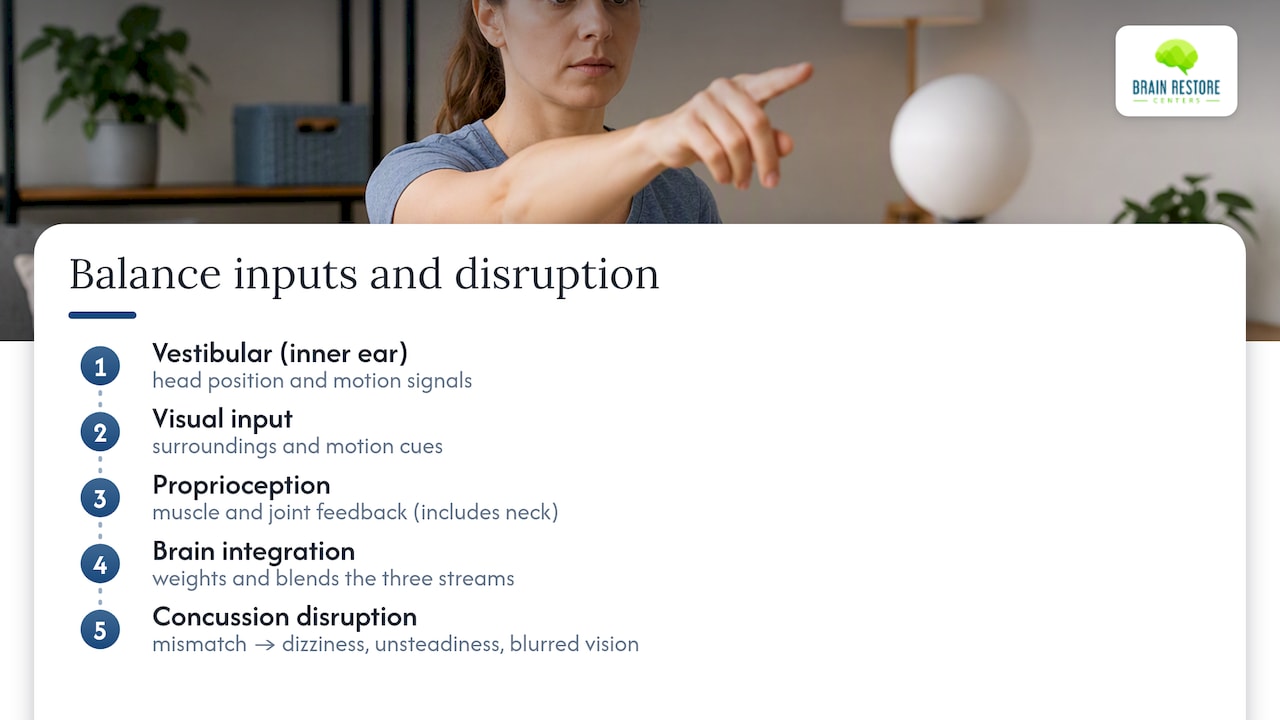
This disruption can happen at several points. The inner ear’s signals themselves may be temporarily altered, the connections between your eyes and vestibular system (the vestibulo-ocular reflex) may not fire as cleanly, or the brain regions responsible for integrating all three signal types may process them more slowly. The result is often a mismatch, your eyes say one thing, your inner ear says another, and your brain struggles to reconcile them quickly, which shows up as dizziness, unsteadiness, or visual blurring during head movement.
The neck plays a role here too. Because cervical muscles and joints feed proprioceptive information into the same balance network, concussion-related neck strain or whiplash-type injury can compound vestibular symptoms, which is part of why a thorough evaluation often includes a cervical spine check alongside vestibular testing. Our overview of how the cervical spine affects concussion symptoms goes into this connection further. Understanding which system or combination of systems is most affected is part of what makes a tailored rehab plan more effective than a one-size-fits-all routine.
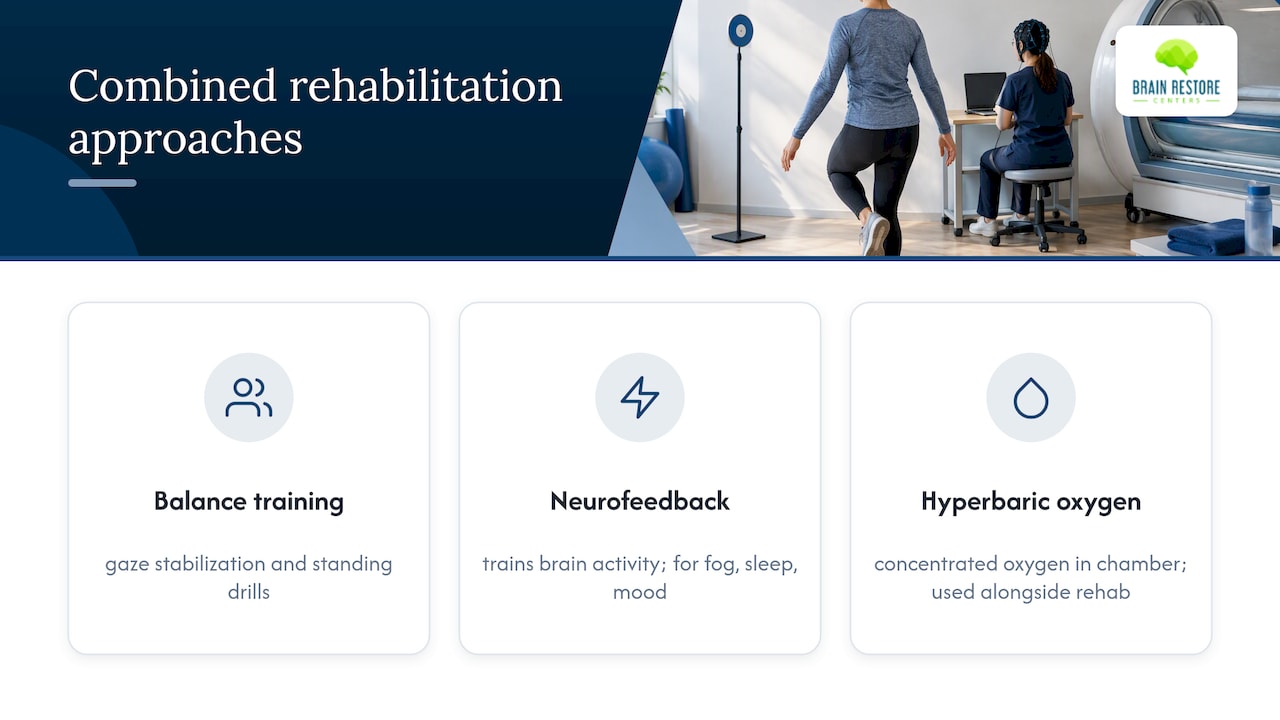
Balance training rarely works in isolation when post-concussion symptoms linger. A multidisciplinary approach treats the balance system alongside the broader neurological picture, pairing gaze stabilization and standing balance drills with therapies aimed at supporting brain function more generally.
Neurofeedback is a technique that trains brain electrical activity patterns using real-time feedback, and it is sometimes used alongside balance work for people whose concussion symptoms include cognitive fog, sleep disruption, or mood changes in addition to dizziness. Hyperbaric oxygen therapy, which involves breathing concentrated oxygen in a pressurized chamber, is another modality used within comprehensive recovery plans for people with persistent post-concussion symptoms, often alongside physical rehabilitation like balance and vestibular work rather than replacing it.
The logic behind combining approaches is that concussion recovery is rarely just a balance problem or just a cognitive problem. When dizziness, brain fog, and physical deconditioning overlap, addressing only one piece can leave you stuck. A coordinated plan that layers balance training with other targeted therapies, guided by what your specific assessment reveals, tends to address more of what is actually driving your symptoms. We describe how these pieces fit together in our overview of comprehensive brain health restoration.
A balance program that works well for a 22 year old athlete is not the right fit for a 68 year old with a history of inner ear problems. Age matters: older adults often have less vestibular reserve to begin with, so progressions tend to move more conservatively and with closer attention to fall risk.
Severity and timing matter too. Someone a few days post-injury with mild symptoms may tolerate standing progressions quickly, while someone with persistent symptoms weeks or months out may need a slower ramp with more frequent reassessment. Coexisting conditions change the picture as well. A history of migraine, prior concussions, anxiety, or a pre-existing inner ear disorder like BPPV can all influence which exercises are tolerated and how quickly you should advance.
This is part of why a generic printed handout of exercises only goes so far. A plan that accounts for your age, how long you have had symptoms, and what else is going on with your health tends to produce steadier progress than following a fixed protocol regardless of fit. If you are managing a coexisting condition alongside concussion symptoms, that is worth raising explicitly during any evaluation rather than assuming a standard program will account for it on its own.
Reintroducing balance-demanding activities, whether that is driving, returning to a desk job that involves screens, or getting back to a sport, works best as a gradual process rather than an all-or-nothing return. CDC return-to-activity guidance recommends starting with light aerobic activity, often as little as 5 to 10 minutes, once you can tolerate it, then progressing step by step with at least a day between stages.
Each step should test a little more: light activity, then sport-specific movement without contact, then non-contact training drills, then full-contact practice, and finally full return to competition. The same logic applies to daily life. If a loud grocery store still provokes symptoms, that is useful information, not a setback, and it tells you to spend more time at the previous stage before moving on.
The common thread across both sports and daily activities is that symptoms should guide pace, not a calendar. Stepping back down a level when symptoms flare, rather than pushing through, consistently gets people back to full activity more reliably than ignoring warning signs. If you are unsure how to structure this kind of staged return, our safe exercise after head injury guide breaks the stages down further.
Balance training does not have to stand alone. For people whose concussion symptoms involve neck pain, headaches, or cervicogenic dizziness, chiropractic care addressing cervical spine alignment and mobility can complement vestibular and balance exercises, particularly when neck dysfunction is contributing to the dizziness itself. A chiropractor’s evaluation of the cervical spine is a useful piece of a broader workup, and some chiropractic practices specifically assess head and neck involvement after a possible concussion as part of determining what is driving ongoing symptoms.
Progressive focused rehab, which structures exercise progression around specific deficits and symptom response rather than a generic timeline, is another piece that pairs naturally with balance training. Rather than treating gaze stabilization, standing balance, and gait work as separate homework assignments, a coordinated plan sequences them alongside cervical care and other therapies based on what your assessment actually shows.
The value of this kind of integration is that it treats your recovery as one connected picture instead of a stack of disconnected exercises. When balance training is layered into a plan that also addresses neck involvement, activity pacing, and your specific symptom pattern, progress tends to be more consistent than when each piece is handled in isolation.
When dizziness and unsteadiness do not resolve with home exercises, we find that a full visio-vestibular and cervical assessment clarifies the picture far faster than another few weeks of guessing. Before any evaluation, it helps to bring a symptom log, a list of what you have already tried at home, and any prior reports or imaging, since that context shapes a more tailored progressive rehab plan from the first visit.
— Chad
When home-based balance training has plateaued, a closer look often reveals what the generic exercises missed, whether that is a cervical component, a visio-vestibular mismatch, or symptoms that need a broader approach. Our Brain Restore Program builds a plan around a full assessment and progressive focused rehab tailored to what your evaluation shows, rather than a one-size-fits-all handout.
If persistent dizziness or balance trouble is keeping you from daily activities, scheduling a brain health consultation is a direct way to get a clearer answer and a plan built around your specific recovery.
This article is general information, not a substitute for advice from a qualified doctor. Consult a qualified healthcare professional about your own circumstances before acting on anything here.
Treatment typically starts with brief rest followed by a gradual, symptom-guided return to light activity, mental tasks, and exercise, rather than prolonged inactivity. Clinical guidance recommends monitoring symptoms closely and seeking medical reevaluation if symptoms worsen or persist beyond 2 to 4 weeks.
Higher-level balance work often includes tandem walking, single-leg stance with eyes closed, standing on foam or an unstable surface, and dual-task drills that combine movement with a cognitive challenge. These build on simpler progressions like wide-stance standing and basic gaze stabilization once those feel stable.
Avoid comparing their recovery timeline to someone else’s, dismissing symptoms that are not visible, or suggesting they should be “over it” by now, since recovery pace varies widely between people. It also helps to avoid pressuring them into activities, like watching TV or returning to noisy environments, before they feel ready.
Light screen use is generally fine once it does not worsen your symptoms, though some people find bright screens or fast motion provocative in the early days. A gradual approach, testing short periods first and stopping if dizziness or headache increases, mirrors the same symptom-guided pacing used for physical activity.
See a clinician if dizziness or balance problems persist beyond 2 to 4 weeks, if symptoms are worsening, or if you experience an unexplained fall. A specialist can run visio-vestibular and gait testing to identify what a home program alone cannot catch.
Questions about your next step?
Our Meridian team can help you understand the evaluation process and which care options may fit your needs.
Schedule a Brain Health ConsultationPrefer to speak with our team? Call 208-639-1397


